Wolverine
Gulo gulo gulo
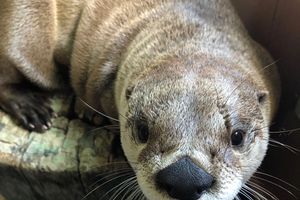
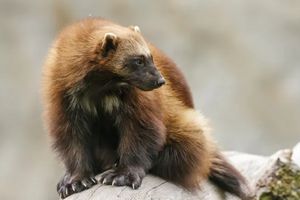
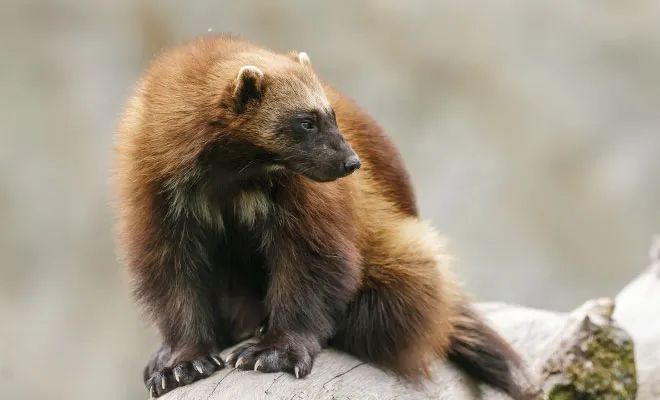
Contrary to popular belief, wolverines are not related to wolves or bears; they are a part of the Mustelid family, which also includes otters, badgers, ferrets, mink, and other weasels. Mustelids are known for being a diverse group of carnivorous mammals and can be very intense for their small size. Wolverines historically ranged from Alaska to New Mexico, but currently are found in Canada, Alaska, and regions of Washington, Oregon, Idaho, Wyoming, and Montana. Compared to other members of the Mustelid family, their body shapes are very similar with large paws, sharp claws, long tails, thick coats of fur, and strong jaws capable of breaking through bones.
Click HERE for a Wolverine Activity Sheet!
Our Current Residents
The Wolverines are almost always visible and may either be sleeping in different spots around their habitat or running around and playing with each other. Wolverines rely on the snow for important parts of their survival, so coming to the Zoo when there is snow may be one of the best times to see the wolverines in their natural element.
Ahmari, Female- Born on February 13, 2016
Ahmari came to the Zoo in 2017 from a Zoo in Finland. She is a part of the European SSP or Species Survival Plan, a program supported by AZA (Association of Zoo and Aquariums), which is a plan to ensure the survival and genetic diversity of species that may need help. Since arriving at ZooMontana, Ahmari has raised six successful offspring: two male kits in 2023, asingle female kit in 2024, and a trio of two females and one male in 2025.
Alvar, Male- Born on February 8, 2013
Alvar came to live at ZooMontana from the Columbus Zoo in late 2025 as a potential new partner for Ahmari. Alvar is larger and darker in color in comparison to Ahmari.
Taxonomy
- Kingdom: Animalia
- Phylum: Chordata
- Class: Mammalia
- Order: Carnivora
- Family: Mustelidae
- Genus: Gulo
- Species: Gulo gulo gulo
Animal Facts
Carnivore: rodents, carrion, and other small prey make up the majority of their diet.
Population Status (according to IUCN): currently listed as Least Concern
Montana Population Status (according to Montana Field Guide): currently listed as Species of Concern
Habitat: boreal forest, arctic, and alpine environments
Activity: diurnal (nocturnal)- mostly active during the day (or at night)